The Taxonomy of Signals Intelligence
Signals intelligence represents the electronic foundation of contemporary intelligence apparatuses. Modern SIGINT operates across three foundational branches: Communications Intelligence (COMINT), Electronic Intelligence (ELINT), and Foreign Instrumentation Signals Intelligence (FISINT). While historically focused on intercepting military high-frequency radio transmissions, modern operational doctrine has shifted decisively toward wideband packet capture across submarine fiber-optic cables, cellular baseband interception, and orbital satellite downlinks.
COMINT encompasses the interception, monitoring, and transcription of human and machine communications. This includes voice calls, encrypted instant messaging payloads, metadata headers, and routing protocols. In contrast, ELINT deals with non-communication electronic emissions, primarily radar signatures, surface-to-air missile guidance links, and electronic counter-countermeasure (ECCM) pulses. Understanding an adversary’s radar wave shapes, pulse repetition frequencies, and antenna rotation speeds allows defense analysts to build electronic order of battle (EOB) profiles and formulate effective radar jamming envelopes.
Physical Capture Modalities: From Airwaves to Subsea Glass
The interception architecture relies on diverse geographic access points:
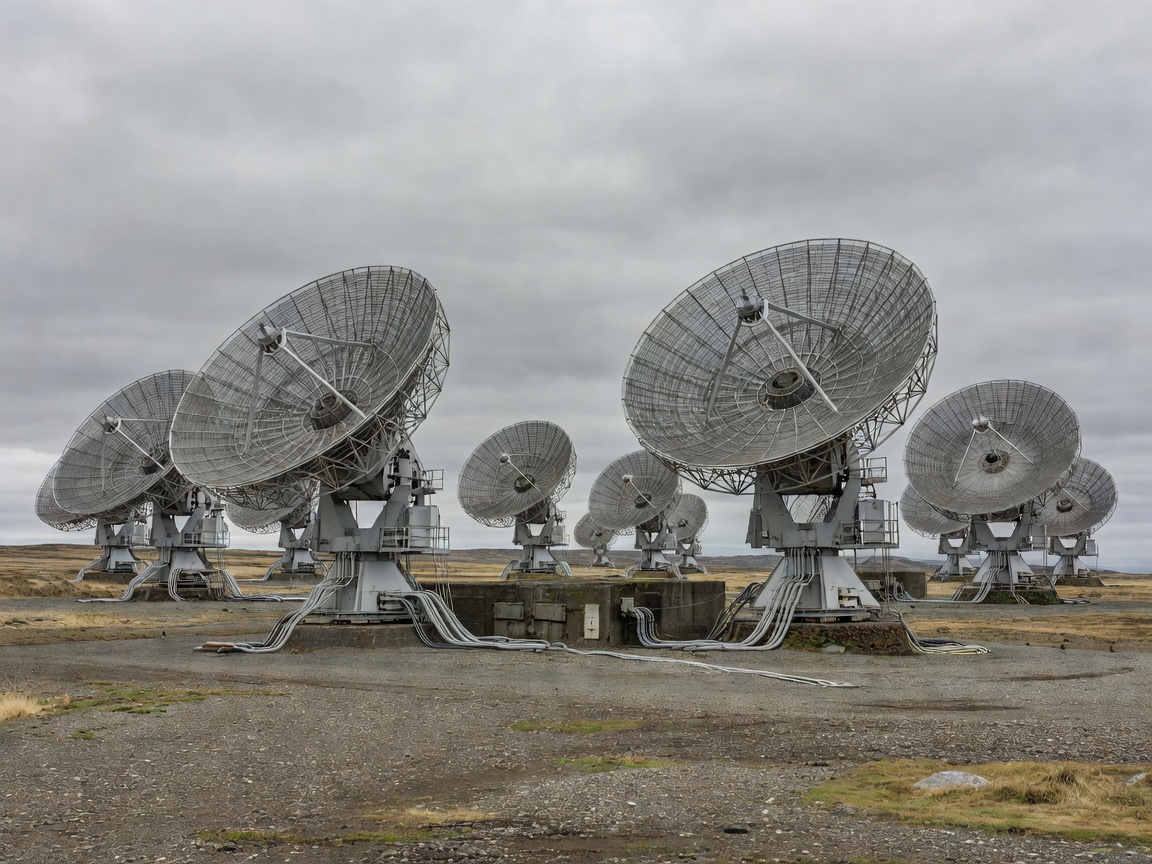
- Terrestrial Listening Stations: Large-aperture parabolic dish arrays and steerable HF receiving fields positioned to capture trans-horizon radio reflections and geostationary commercial satellite downlinks.
- Optical Fiber Tap Arrays: Optical splitters inserted at landing stations or along subsea repeaters. Utilizing prism-based optical taps, collectors deflect a fraction of the photonic signal into storage buffers without causing link disruption or perceptible packet attenuation.
- Airborne & Orbital Collectors: Dedicated reconnaissance aircraft equipped with synthetic aperture radar and phased-array ELINT pods, alongside low Earth orbit (LEO) microsatellites designed to record millimeter-wave tactical transmissions.
- Tactical Cellular Interception: International Mobile Subscriber Identity (IMSI) catchers deployed in proximity to targets, forcing cellular handsets to authenticate through rogue base stations that strip transport-layer encryption.
Technical Comparison: SIGINT Collection Vectors
| Collection Vector | Spectrum / Domain | Operational Advantages | Primary Limitations |
|---|---|---|---|
| Subsea Fiber Splitters | Photonic / Multi-terabit | Massive data volume, comprehensive access to global IP backbone. | Massive data filtering overhead; post-capture decryption required. |
| Satellite Downlink Arrays | C, Ku, and Ka Bands | Captures unencrypted point-to-point and broadcast satellite feeds remotely. | Line-of-sight constraints; susceptibility to directional beamforming. |
| Airborne RF Sweepers | VHF / UHF / Radar Bands | High-mobility, precise directional triangulation of radar emitters. | Vulnerable to air-defense systems; limited persistent station time. |
| Rogue Base Transceiver Stations | Cellular (4G/5G NR Bands) | Instant localized target tracking and mobile IMSI extraction. | Strict range limitations (typically <1.5km); detectable via RF sweeps. |
Metadata Analysis vs. Content Decryption
With the ubiquitous adoption of end-to-end transport layer security (TLS 1.3) and encrypted protocols, direct content reading has become resource-prohibitive for mass capture. Consequently, modern SIGINT doctrine relies heavily on traffic flow analysis and metadata graph reconstruction. By examining IP packet lengths, timing deltas, autonomous system (AS) routing hops, and DNS request bursts, automated machine learning models can classify encrypted traffic patterns without breaking underlying cipher suites.
For targeted operations where content decryption is mandatory, agencies deploy advanced cryptographic compromise, side-channel attacks, or pre-encryption endpoint interception via targeted software implants.
Operational Trade-offs and Strategic Challenges
The fundamental challenge of modern SIGINT is the signal-to-noise ratio. The explosion of global data exchange means collection systems collect petabytes of irrelevant background telemetry every hour. Without automated entity extraction, natural language translation engines, and graph database correlation, collection infrastructure risks paralysis by information overload.