The Mathematics of Information Concealment
Throughout espionage history, the struggle between cipher designers (cryptographers) and codebreakers (cryptanalysts) has shaped geopolitical outcomes. From the electromechanical rotor operations at Bletchley Park during the Second World War to contemporary supercomputing clusters executing lattice-reduction algorithms, the cryptographic domain is the ultimate battleground of sovereign secrets.
Cryptanalysis is the study of mathematical techniques for deciphering encoded ciphertext without access to the genuine decryption key. Unlike software vulnerability exploitation, pure cryptanalysis targets the underlying mathematical structures of the algorithm itself, seeking statistical biases, differential patterns, or computational shortcuts that reduce key search spaces.
Evolutionary Spectrum: Historical to Post-Quantum
Cryptographic systems have evolved across three distinct eras:
- Classical & Mechanical Era: Polyalphabetic ciphers, one-time pads, and electromechanical rotor machines (such as the Enigma and Typex). Breaking these systems relied on language frequency analysis, index of coincidence metrics, and mechanical testing machines.
- Symmetric & Asymmetric Modern Standards: Block ciphers like the Advanced Encryption Standard (AES) with 128/256-bit keys, alongside asymmetric public-key systems (RSA, Diffie-Hellman, Elliptic Curve Cryptography). These protect modern internet communications based on the hardness of integer factorization and discrete logarithms.
- Post-Quantum Era (PQC): Mathematical frameworks designed to withstand both classical supercomputers and prospective quantum computers running Shor’s or Grover’s algorithms. Standards are centered around module-lattice problems (such as ML-KEM and ML-DSA), where no known polynomial-time quantum attacks exist.
Comparison of Cryptographic Primitives
| Algorithm Class | Representative Standard | Theoretical Security Margin | Primary Attack Vector |
|---|---|---|---|
| One-Time Pad (OTP) | Vernam Cipher (Pure) | Information-theoretically secure (unbreakable) if key is truly random and unrepeated. | Key distribution logistics; physical theft of key pads. |
| Symmetric Block Cipher | AES-256 (GCM Mode) | 256 bits of security; resilient against Grover's algorithm (effective 128-bit quantum margin). | Side-channel timing, power analysis, or poor implementation. |
| Asymmetric (Legacy) | RSA-4096 / ECDH (P-384) | Strong against classical computing; vulnerable to future Shor's algorithm attacks. | Quantum polynomial-time factorization; harvest now, decrypt later. |
| Post-Quantum Lattice | Lattice-based (ML-KEM-768) | Immune to Shor's algorithm; based on learning with errors (LWE) hardness. | Algebraic lattice reduction attacks; large public key sizes. |
Side-Channel Attacks and Hardware Enclaves
In practical intelligence environments, cryptanalysts rarely attack algorithms through brute force mathematics. Instead, they exploit physical implementations. Side-channel attacks measure inadvertent emissions generated while cryptographic computations take place on physical silicon:
- Differential Power Analysis (DPA): Measuring micro-fluctuations in electrical current consumed by the processor during round calculations to isolate intermediate key bytes.
- Electromagnetic Analysis (EMA): Positioning RF near-field probes millimeters above microprocessor packages to capture radiated electromagnetic waves generated by arithmetic logic units.
- Acoustic Cryptanalysis: High-sensitivity parabolic microphones recording high-frequency coil whining emitted by voltage regulator capacitors during intense decryption cycles.
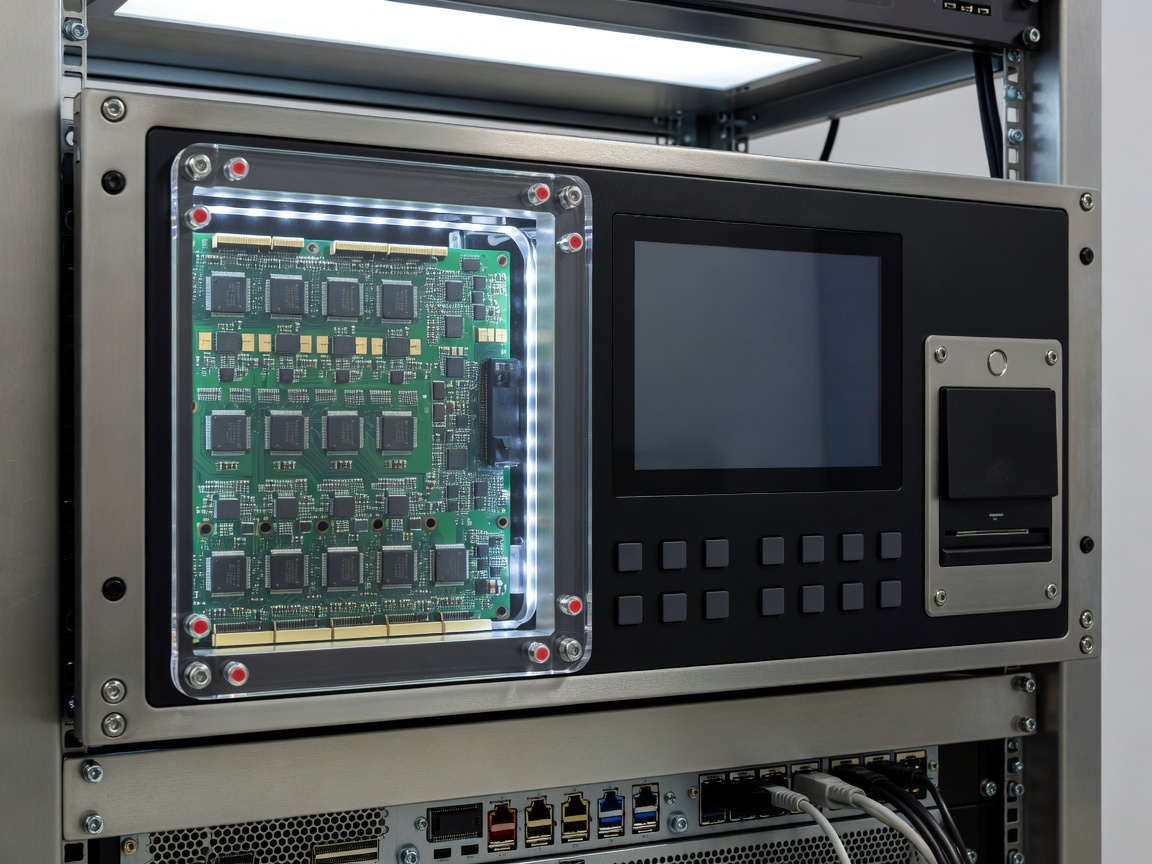
To counteract these vectors, high-assurance intelligence organizations mandate the use of Hardware Security Modules (HSMs) and Secure Enclaves. Certified under strict standards (such as FIPS 140-3 Level 4), these tamper-resistant physical modules incorporate active sensor meshes that immediately zeroize (erase) stored master encryption keys upon detecting physical casing drilling, temperature anomalies, or chemical decapping.
The "Harvest Now, Decrypt Later" Threat
A major driver of contemporary cryptographic defense is retroactive interception. Foreign intelligence services actively capture and store petabytes of encrypted government, defense, and commercial data today. Even if they cannot break AES-256 or Elliptic Curves with current infrastructure, these archives are held in cold storage awaiting mathematical breakthroughs or sufficiently scaled quantum computing platforms capable of historic decryption.